

DocumentationWhat payment methods does Hostednode accept?What are Hostednode's billing cycles?When is the monthly renewal charge generated?When are services suspended for non-payment?When is a service deleted for non-payment?What should you do if a payment method is unavailable?Are all services subject to VAT?Do you issue receipts or invoices?How to create a customer account on HostednodeDo you accept cryptocurrency payments?How to Access DirectAdmin and Explore the Panel’s Main FeaturesHow to Configure PHP for Subdomains and Additional Domains in DirectAdminHow to change the PHP version and settings in DirectAdminHow to Create an Email Account in DirectAdminHow to use ClamAV antivirus from DirectAdminHow to Enable and Use Redis from DirectAdminHow to Add a Domain Alias and Use It for Email in DirectAdminHow to Add an Additional Domain in DirectAdminHow to Add an Additional User to an Existing Database in DirectAdminHow to configure an autoresponder in DirectAdminHow to Set Up a Vacation Message in DirectAdminHow to Create a Subdomain in DirectAdminHow to Create a Cron Job in DirectAdminHow to Create a Database and Associate Its User in DirectAdminHow to Create an FTP Account in DirectAdminHow to Create a Mailing List in DirectAdminHow to Create an Email Forwarder in DirectAdminHow to Create a Site Redirect in DirectAdminHow to Install WordPress with Softaculous WordPress Management in DirectAdminHow to Install WordPress with the DirectAdmin WordPress ManagerHow to Modify MX Records to Use Google Workspace in DirectAdminHow to review the web application firewall and create a rule exception in DirectAdminHow to Check Account Resource Usage in DirectAdmin
TUTORIAL

How to Add an Additional User to an Existing Database in DirectAdmin

Create an additional user or choose an existing one, grant them access to a database, and review their privileges in DirectAdmin.

Creating a database user and granting them access to a database are separate actions. The new user cannot use any database until you explicitly grant access.

Before you begin

Identify the full name of the existing database and the permissions the person or application needs. Keep the current user: you do not need to replace it to add another one.

On the dashboard, open Account Manager → Databases.
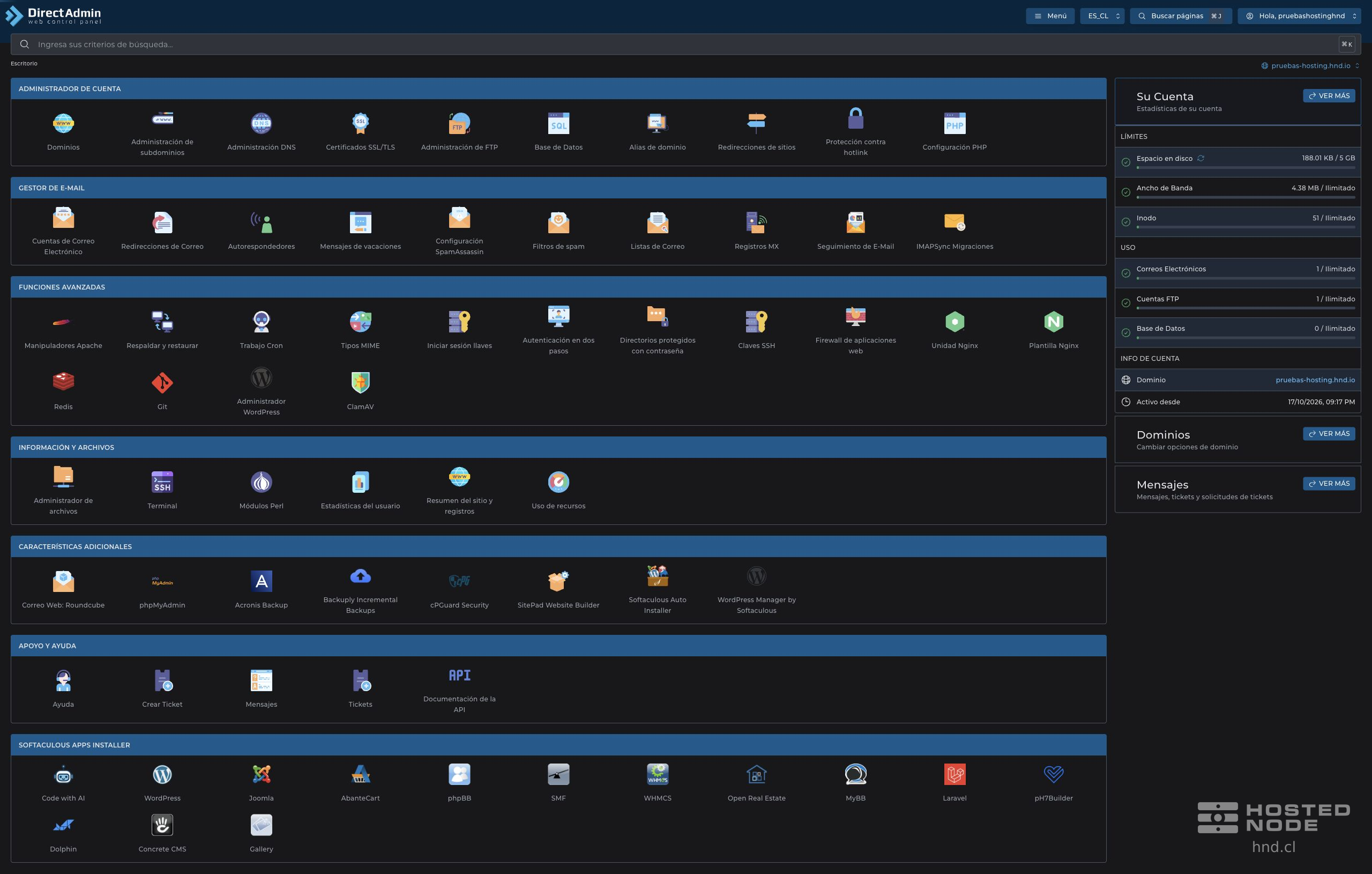
DirectAdmin dashboard with tool groups and account statistics.

1. Create the additional user if it does not already exist

  1. Click Manage Users.

  2. Under Create User, enter the suffix in Username. The panel adds your account prefix before it.

  3. Set a long, unique password and click Create.

  4. Store the connection summary privately and close it before sharing your screen.
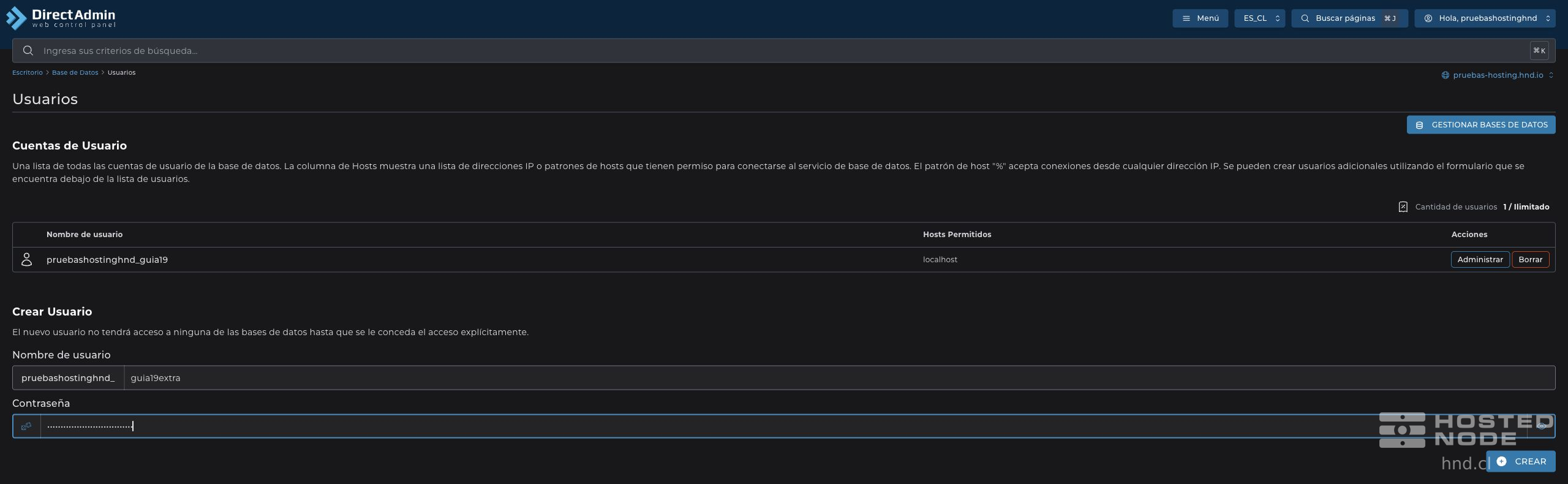
Create User form with the account prefix and a hidden password.

If the user already appears under User Accounts, you can proceed with the association without creating it again. The allowed host shown for this account is localhost; you do not need to expand it to associate a local database.

2. Grant access to the existing database

  1. Return to Manage Databases and click Manage in the row for the correct database.

  2. Find User Access → Grant Access to an Additional User.

  3. Open the selector and choose the user's full name.

  4. Review the notice that all available privileges will be granted and click Grant Full Access.
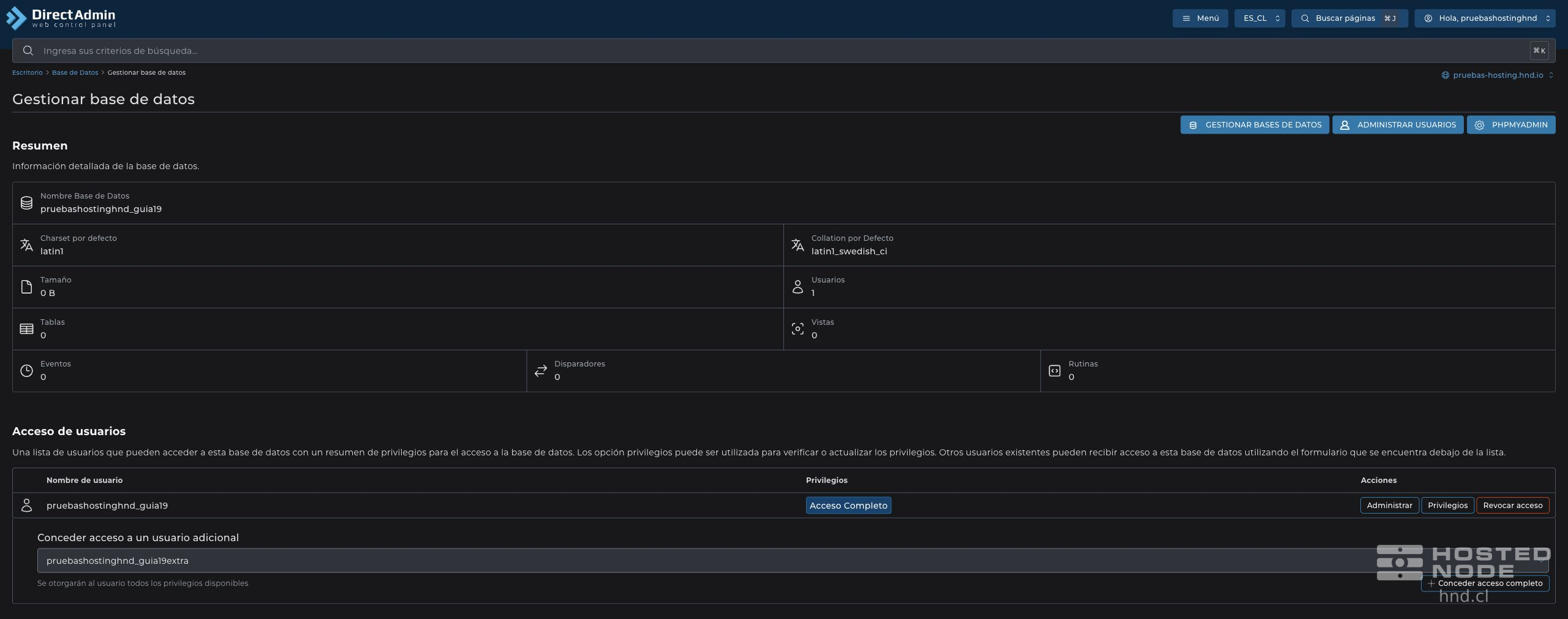
Additional user selector and Grant Full Access button.

Wait for the confirmation The user was successfully assigned to the database. The user should appear under User Access alongside the existing user.
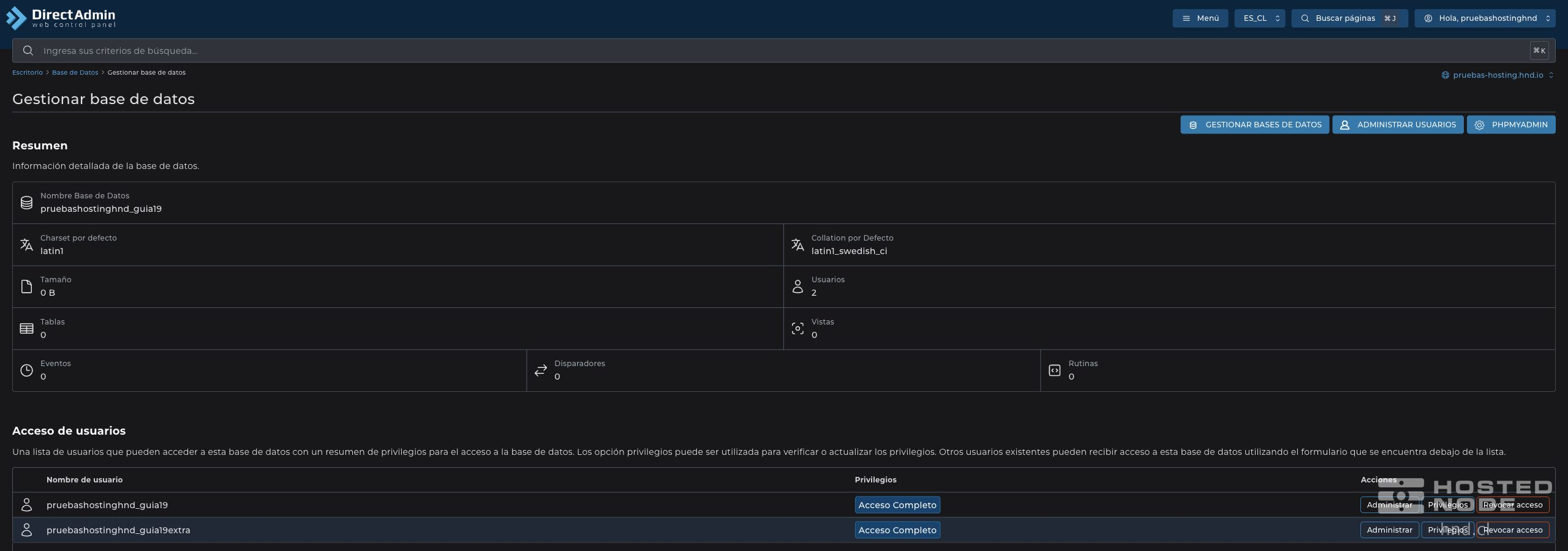
Database with two users under User Access.

3. Review the privileges

The Grant Full Access button grants full access to that database. If the application requires fewer permissions, open Privileges in the new user's row, keep only the required permissions, and click Save Changes.
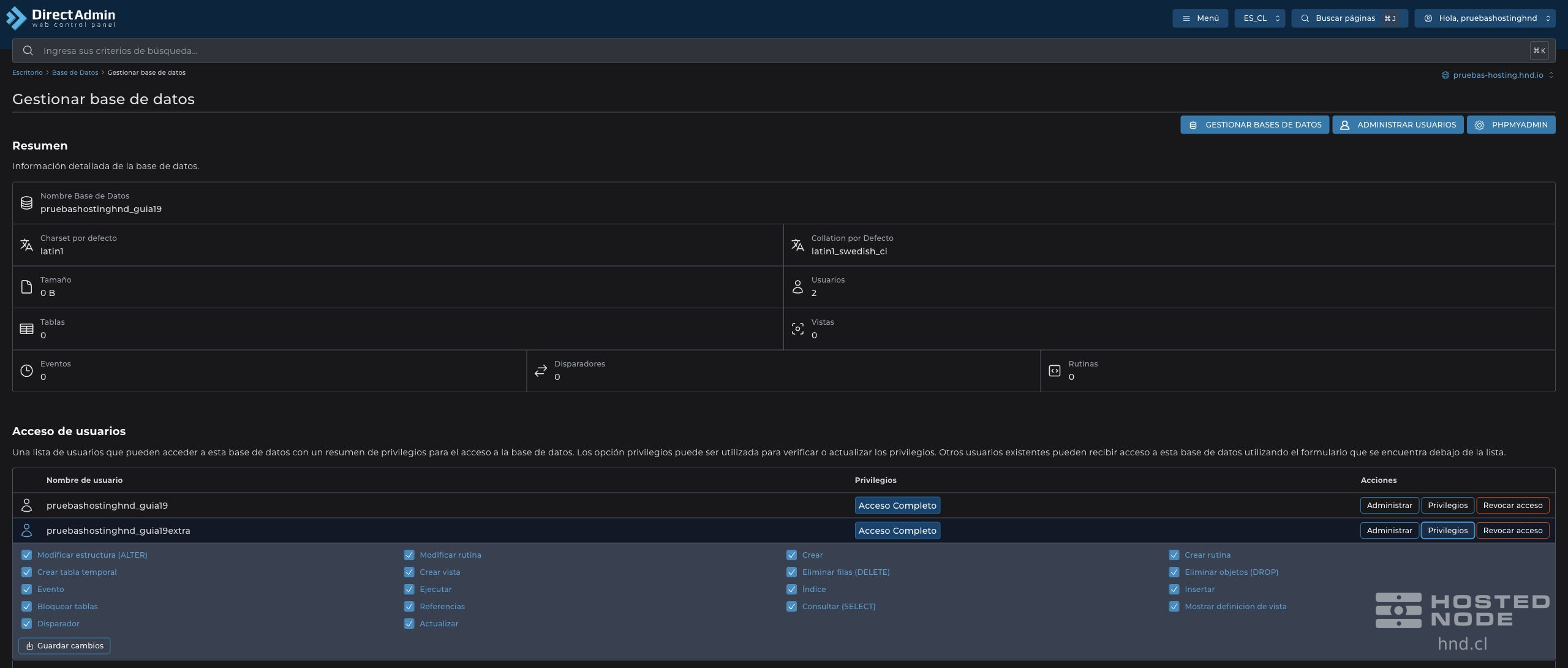
User permissions associated with a database and the Save Changes button.

Check the database name, the new user, and their permissions. Use their credentials in the relevant application and verify that it can perform the authorized operations.

If the user does not appear in the selector, check whether it is already associated or still needs to be created. Revoke Access removes the association with that database; do not use it on the existing user if you only want to add another one.